
Home / News / ICC Overseas Cap Plan Puts ILT20's Star Model at Risk
ICC Overseas Cap Plan Puts ILT20's Star Model at Risk
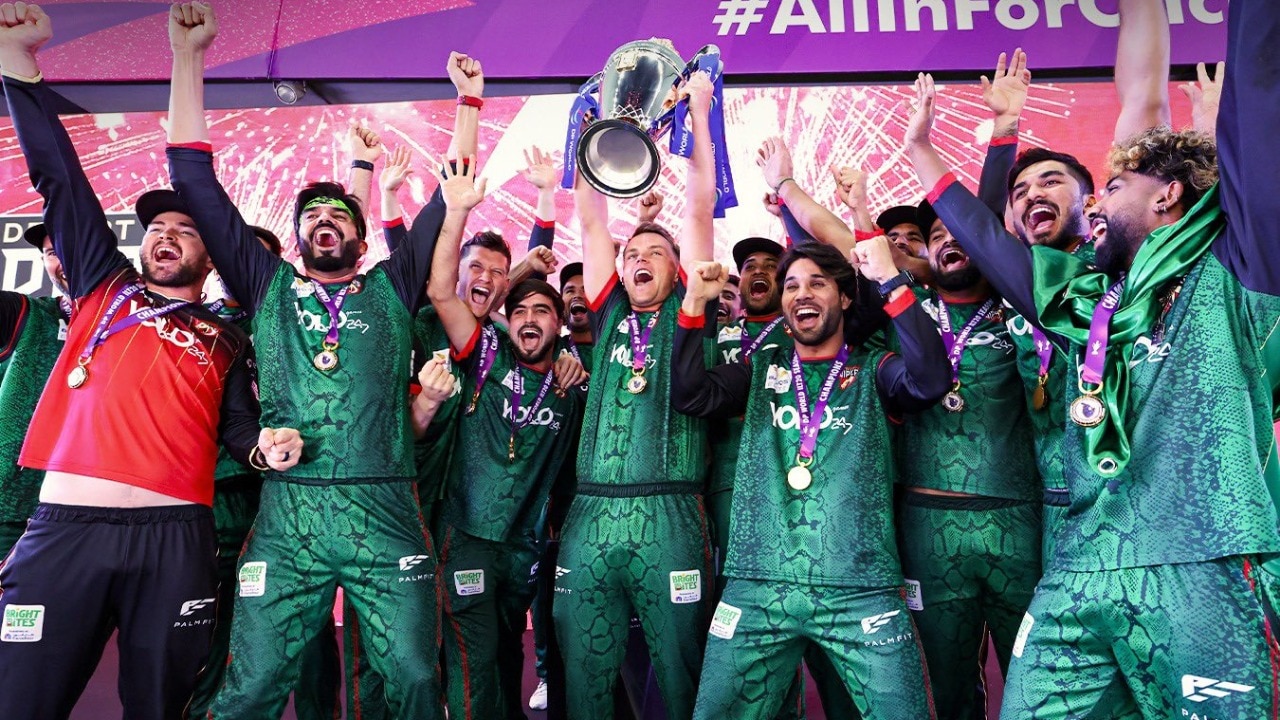
Photo: India Today
The ICC's franchise leagues review group will ask chief executives in Bali to cap overseas players at four per playing XI, a move that would hit the ILT20 hardest. The league currently allows up to nine overseas players in an XI, and five of its six teams are tied to IPL owners.
The International Cricket Council is preparing the most far-reaching shake-up of franchise cricket yet, and no league has more at stake than the ILT20. Proposals from the ICC's franchise leagues review group go before chief executives and board heads at the quarterly meeting in Bali this weekend, and the most contentious item on the agenda is a strict limit of four overseas players per starting XI — a rule that would cut the ILT20's current allowance of nine by more than half.
The four-player cap at the heart of it
The cap is the proposal that has alarmed the leagues. Both the ILT20 and Major League Cricket in the United States were granted exemptions when the ICC last set overseas limits in 2023, and both have built their appeal on star power: the ILT20 currently permits up to nine overseas players in a playing XI — everyone bar the two UAE players its rules require — while MLC allows six. A four-player limit would force teams to lean heavily on local UAE and American talent instead, and the review group's own case acknowledges the cost: fewer international names means less of the pulling power that sells broadcast deals and fills stadiums. One league official described the prospect as “very concerning” and questioned whether their tournament could function at all, saying leagues had previously been assured of protection under a grandfather clause. External legal advice sought by the review group, however, concluded that member boards have no valid legal grounds to challenge the changes.
Why the ILT20 is the test case
The ILT20 sits at the centre of the debate because it is the most international of the franchise leagues. Its Season 5 playing conditions require every XI to include at least two UAE players, two Afghanistan players and one Associate player — a structure designed to develop regional cricket while still fielding world-class overseas stars such as Babar Azam, Rashid Khan and Heinrich Klaasen. That balance is also a commercial one: five of the six ILT20 teams have ties to Indian Premier League or Women's Premier League owners, and four MLC sides are linked to IPL groups, which makes any cap politically sensitive as well as sporting. The review group was formed in July to protect the global calendar and the sport's integrity, and it is chaired by Bangladesh Cricket Board president Tamim Iqbal, alongside England and Wales Cricket Board chief executive Richard Gould, Cricket Australia boss Todd Greenberg and Board of Control for Cricket in India secretary Devajit Saikia. The proposals are only that — proposals. A similar push in 2023, when a working group recommended the same four-player limit, was rejected by the ICC's chief executives' committee in Durban, and the leagues kept their exemptions. What is different this time is the breadth of the package and the legal advice behind it.
Tougher checks on money and integrity
The cap is only one part of a wider package. Under the current rules, only tournaments in Associate Member countries require direct ICC approval, while Full Members sanction leagues within their own borders. The review group wants Full Members to run stricter checks on tournament funding and player payment protections, and it wants the ICC to be able to audit the sanctions they grant. If a national board fails to meet regulatory standards, or if serious integrity concerns arise before or during an event, the ICC could step in to reject or revoke a league's licence. The push follows warnings from the ICC's head of anti-corruption, Andy Ephgrave, that his unit now receives more reports of corrupt approaches on the franchise circuit than in international cricket. Leagues would also have to pay an upfront application fee to fund due diligence and investigations, and employ either the ICC's Anti-Corruption Unit or an ICC-approved integrity body. High-risk leagues would have to cover the unit's costs on a not-for-profit basis, or see their applications rejected outright. The panel also wants to ban sponsorship from betting companies and their surrogates where they facilitate gambling in countries where it is illegal, a rule that would affect South Africa's SA20 and several smaller leagues.
Solidarity fees, league caps and legends leagues
The review group has also asked the chief executives' committee to debate standardising the “solidarity payment” a host board pays to an overseas player's home board. The fee is currently negotiated between boards — an arrangement that recently produced a standoff between the Pakistan Cricket Board and the Abu Dhabi T10 — and could become a mandatory, fixed percentage across all tournaments. Executives will also discuss capping the number of leagues a single country can host to protect international cricket, a measure that would fall primarily on the UAE, and how to regulate “legends leagues”, after the panel warned that exhibition events blur the lines between active and retired players and generate significant integrity concerns. For the ILT20, the timing is delicate. Season 5 begins on Saturday, 21 November, when defending champions Desert Vipers meet MI Emirates in Dubai, and it runs through to the final on Sunday, 20 December under the playing conditions the league published on 7 November. Nothing agreed in Bali would rewrite those conditions overnight, but the direction of travel is now unmistakable: the league that has thrived by packing nine overseas players into every XI is the one the ICC's new rules would change most.
FAQs
What is the ICC proposing for franchise T20 leagues?
The ICC's franchise leagues review group has proposed a major expansion of the governing body's powers, including a strict cap of four overseas players per playing XI, stricter checks on tournament funding and player payments, ICC audits of league sanctions, an upfront application fee, and mandatory use of the ICC's Anti-Corruption Unit or an approved integrity body. The proposals go before chief executives and board heads at the ICC's quarterly meeting in Bali this weekend.
How would a four-overseas-player cap affect the ILT20?
The ILT20 currently allows up to nine overseas players in a playing XI, more than any other major league, so a four-player cap would cut its overseas contingent by more than half. Teams would have to rely far more on local UAE talent, alongside the two Afghanistan players and one Associate player each XI must already include. That loss of star power is why one league official called the prospect 'very concerning'.
Who is behind the ICC review and when is it decided?
The review group was formed in July 2026 and is chaired by Bangladesh Cricket Board president Tamim Iqbal, with ECB chief executive Richard Gould, Cricket Australia boss Todd Greenberg and BCCI secretary Devajit Saikia as members. Its proposals go before chief executives and board heads at the ICC's quarterly meeting in Bali this weekend. Nothing is decided yet — a similar push for a four-player cap was rejected by the chief executives' committee in 2023.
Does this affect ILT20 Season 5 starting on 21 November?
No decision taken in Bali would rewrite Season 5 overnight. The season begins on Saturday, 21 November, when Desert Vipers meet MI Emirates in Dubai, and runs to the final on 20 December under its published playing conditions. Those require every XI to include at least two UAE players, two Afghanistan players and one Associate player. The proposals are about the future of franchise cricket — and the ILT20 would be the league most changed if they are adopted.